
What Is On-Page SEO? A Complete Checklist for UK Business Owners in 2026
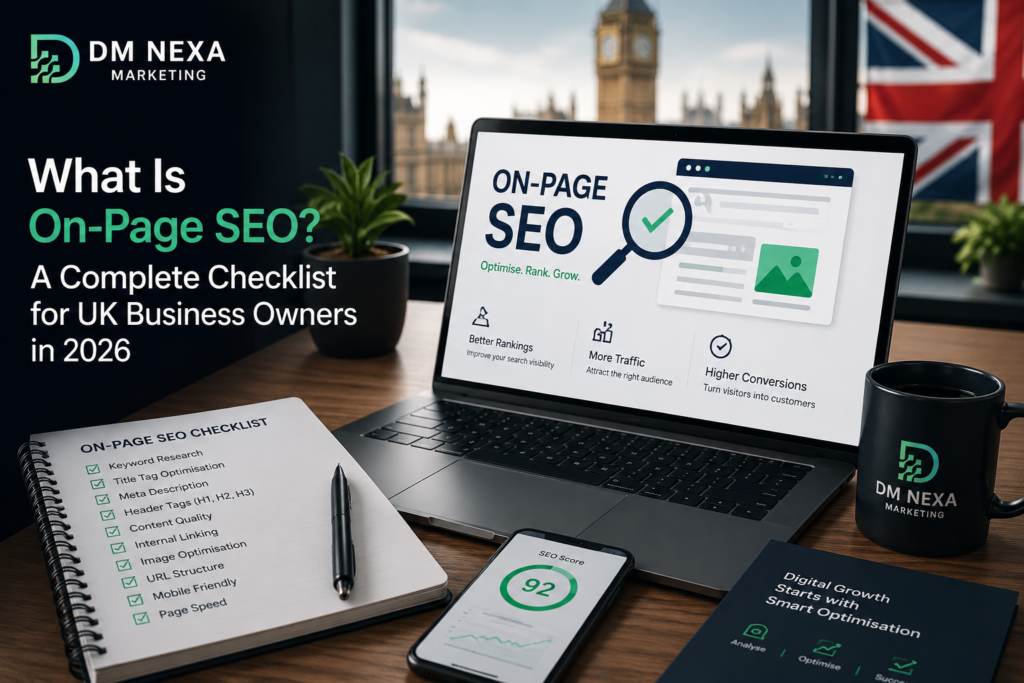
If you want your website to rank higher on Google in 2026, simply publishing content is no longer enough. Search engines have become much better at understanding user intent, evaluating content quality, and measuring the overall experience visitors have on a webpage. That means every page on your website needs to be carefully optimised to meet both user expectations and search engine requirements. Whether you run a local trades business, an online shop, or a professional service company, following a proven on page seo checklist can help improve your visibility, attract more qualified visitors, and generate valuable leads without relying solely on paid advertising.
On-page SEO is one of the few aspects of search engine optimisation that you can control directly. From writing compelling page titles to improving page speed and structuring your content correctly, every optimisation plays a role in helping your pages perform better in search results. In this guide, you’ll learn exactly what on-page SEO is, why it matters for UK businesses, and the practical steps you can take to optimise every webpage for long-term success.
What Is On-Page SEO?
On-page SEO refers to the process of optimising individual webpages so they perform better in search engine results while providing a positive experience for visitors. Unlike off-page SEO, which focuses on earning backlinks and building authority from external websites, on-page SEO involves improving elements that exist directly on your website. These include page titles, headings, content, URLs, images, internal links, and user experience factors such as page speed and mobile responsiveness.
Search engines analyse these elements to determine how relevant and useful a page is for a particular search query. A well-optimised webpage makes it easier for Google to understand your content while helping users find the information they’re looking for quickly. For UK business owners, investing time in on-page SEO creates a strong foundation for all other digital marketing efforts, making it easier to attract organic traffic and compete with larger businesses.
Why On-Page SEO Matters for UK Businesses in 2026?
The way people search online continues to evolve, but Google’s objective remains the same: delivering the most relevant and helpful results. Businesses that create valuable content while offering an excellent user experience are more likely to achieve higher rankings. This is particularly important in competitive UK markets, where local companies often compete for the same search terms and customers. Strong on-page optimisation helps your website stand out by demonstrating relevance, authority, and trustworthiness.
A properly optimised website also benefits visitors beyond search rankings. Faster loading pages, logical navigation, clear headings, and informative content encourage users to stay on your site for longer and take meaningful actions, such as making an enquiry or purchasing a product. Whether you’re targeting customers in your local area or across the UK, applying effective on page seo tips uk can significantly improve both search visibility and conversion rates over time.
The Ultimate On Page SEO Checklist
Start with Thorough Keyword Research
Every successful SEO strategy begins with understanding what your audience is searching for. Before creating or updating a webpage, identify a primary keyword that closely matches the page’s purpose and supports user intent. Supporting keywords and related search terms should also be included naturally throughout your content to reinforce topical relevance without making the text feel repetitive or forced.
Keyword research isn’t simply about finding high-volume phrases; it’s about understanding the questions, problems, and needs behind each search. When you know exactly what your audience wants, you can create content that answers those questions more effectively than your competitors. This approach not only improves rankings but also increases engagement because visitors find genuinely useful information rather than keyword-filled content.
Optimise Your Page Title and Meta Description
Your page title is one of the first things both search engines and potential visitors see. A well-written title should clearly describe the page, include your primary keyword naturally, and encourage users to click. Keeping titles concise while making them compelling helps improve click-through rates without sacrificing readability. Similarly, a strong meta description provides a brief summary of the page and gives users another reason to choose your result over others.
Avoid writing generic titles or stuffing them with multiple keywords. Instead, focus on clarity and relevance. Each page should have a unique title and meta description that accurately reflects its content. This not only improves SEO but also creates a better user experience by setting the right expectations before someone visits your website.
Use a Clear Heading Structure
A logical heading structure makes your content easier to read and helps search engines understand the hierarchy of information on your page. Every webpage should include one descriptive H1 heading that clearly communicates the main topic, followed by H2 and H3 headings that organise supporting sections into a natural flow. Well-structured headings improve accessibility, increase readability, and encourage visitors to continue reading.
Rather than inserting keywords into every heading, write headings that answer common user questions and accurately describe the information that follows. Breaking content into meaningful sections also makes longer articles easier to scan, which is especially important for users browsing on mobile devices. A well-organised page demonstrates professionalism while making important information easier to find.
Create Helpful, High-Quality Content
High-quality content remains the heart of every successful SEO strategy. Instead of focusing solely on word count, prioritise creating content that genuinely helps your audience solve a problem or answer a question. Google rewards pages that demonstrate expertise, provide accurate information, and satisfy search intent. This means every paragraph should offer real value rather than simply repeating keywords.
If you’re wondering how to optimise a webpage for seo, begin by writing for people before search engines. Use clear language, explain concepts thoroughly, include practical examples where appropriate, and keep your information up to date. Fresh, relevant content builds trust with readers and encourages them to spend more time on your website, sending positive engagement signals that can support long-term search performance.
Optimise Your URLs
A clean and descriptive URL helps both users and search engines understand what a page is about before it’s even opened. Short URLs containing relevant keywords are generally easier to read, remember, and share than long addresses filled with unnecessary numbers or parameters. For example, a URL such as /on-page-seo-checklist is far more effective than a generic string of random characters.
When creating URLs, keep them simple, use hyphens to separate words, and avoid including unnecessary dates or duplicate keywords. Consistent URL structures across your website also make navigation more intuitive and contribute to a more organised site architecture, which can improve crawling and indexing efficiency.
Improve Your Internal Linking Strategy
Internal links help search engines understand the relationship between pages on your website while guiding visitors towards additional useful content. Instead of leaving users at the end of a page with nowhere to go, link naturally to relevant articles, service pages, or resources that expand on the topic. This keeps users engaged for longer and helps distribute authority across your website.
When adding internal links, use descriptive anchor text that tells readers what they can expect after clicking. For example, if you’d like to learn more about improving your organic visibility without relying on paid campaigns, read our guide on How to Rank Your Website on Google Without Paying for Ads. Linking related content in this way strengthens your site’s structure and makes it easier for both users and search engines to discover valuable information.
Optimise Images for Better SEO
Images make your content more engaging, but they should also be optimised for performance and accessibility. Large image files can slow down your website, leading to a poor user experience and lower search rankings. Before uploading images, compress them without sacrificing quality and use modern formats such as WebP where possible to reduce loading times.
Every image should also have a descriptive file name and meaningful alt text. Alt text helps search engines understand the image while improving accessibility for users who rely on screen readers. Avoid keyword stuffing in image descriptions; instead, write concise, accurate text that reflects the image’s content. Well-optimised images contribute to faster page speeds, better usability, and additional opportunities to appear in image search results.
Improve Page Speed and Core Web Vitals
Website speed is no longer just a technical consideration, it has a direct impact on user satisfaction and search performance. Visitors expect webpages to load quickly, and even a small delay can increase bounce rates and reduce conversions. Google’s Core Web Vitals measure important aspects of user experience, including loading performance, responsiveness, and visual stability, making them essential factors for modern SEO.
To improve page speed, minimise unnecessary scripts, optimise images, enable browser caching, and reduce unused code where possible. Choosing reliable web hosting and regularly monitoring your site’s performance can also make a noticeable difference. A faster website not only supports better rankings but also creates a smoother experience that encourages visitors to stay, explore more pages, and complete desired actions.
Ensure Your Website Is Mobile-Friendly
With Google’s mobile-first indexing, the mobile version of your website is now the primary version used for crawling and ranking. This means your website should deliver the same high-quality experience on smartphones and tablets as it does on desktop devices. Responsive design, readable text, intuitive navigation, and touch-friendly buttons all contribute to a better mobile experience.
It’s also important to test your pages regularly across different devices and screen sizes. Check that images scale correctly, forms are easy to complete, and navigation menus remain simple to use. A mobile-friendly website not only supports stronger SEO but also helps convert visitors who increasingly browse, shop, and contact businesses directly from their phones.
Use Schema Markup to Help Search Engines Understand Your Content
Schema markup, also known as structured data, provides additional context about your content to search engines. By implementing relevant schema types, such as Organisation, Local Business, FAQ, or Article schema, you can help Google better interpret your pages and improve your eligibility for enhanced search results.
While schema markup doesn’t guarantee higher rankings, it can increase your visibility by enabling rich results that display additional information directly in search listings. These enhanced results often attract more attention and improve click-through rates. For UK businesses looking to strengthen their online presence, structured data is a valuable addition to any comprehensive on-page SEO strategy.
Focus on User Experience and Trust Signals
Successful SEO isn’t just about pleasing search engines, it’s about creating a website that visitors trust and enjoy using. Clear navigation, easy-to-read content, secure HTTPS connections, accurate contact information, and visible calls to action all contribute to a positive user experience. When visitors can quickly find the information they need, they’re more likely to stay on your site and engage with your business.
Building trust also means keeping your content accurate and up to date. Regularly review your pages to ensure statistics, pricing, services, and contact details remain current. Demonstrating professionalism and credibility encourages both users and search engines to view your website as a reliable source of information.
Common On-Page SEO Mistakes to Avoid
Even well-designed websites can lose rankings if common SEO mistakes go unnoticed. Keyword stuffing remains one of the biggest issues, making content difficult to read while offering little value to users. Other frequent problems include duplicate content, poorly written title tags, missing meta descriptions, multiple H1 headings, broken internal links, and unoptimised images that slow page loading times.
Another mistake is publishing content and never updating it again. Search behaviour, industry trends, and Google’s algorithms continue to evolve, so your content should evolve too. Regular audits help identify outdated information, technical issues, and opportunities for improvement before they affect your visibility. Avoiding these common pitfalls ensures your optimisation efforts deliver lasting results rather than short-term gains.
How Often Should You Review Your On-Page SEO?
On-page SEO is an ongoing process rather than a one-time task. Reviewing your website every few months helps you identify pages that could benefit from refreshed content, improved keyword targeting, or updated internal links. Monitoring performance through tools such as Google Search Console and analytics platforms can also highlight pages that are losing visibility or attracting fewer visitors than expected.
It’s equally important to revisit your highest-performing pages. Updating statistics, improving readability, adding new insights, and strengthening calls to action can help maintain their rankings over time. Consistent optimisation keeps your website aligned with changing search trends and ensures it continues delivering value to both users and search engines.
Final Thoughts
A well-executed on page seo checklist is one of the most effective ways to improve your website’s visibility, attract qualified traffic, and create a better experience for your visitors. From keyword research and high-quality content to page speed, mobile usability, and structured data, every element plays a role in helping your pages perform better in search results. Rather than chasing quick wins, focus on continuous improvements that provide genuine value to your audience.
If you’d like expert support in implementing these strategies and improving your website’s search performance, explore our SEO Ammanford services. Our team can help you build a stronger online presence with tailored SEO solutions designed to deliver sustainable growth for your business.
More Posts