
Local Citations for UK Businesses: What They Are and Why They Still Matter
Introduction
When people search for a local business, they expect to find accurate and trustworthy information within seconds. Whether they’re looking for a plumber in Swansea, a solicitor in Cardiff, or a café in Carmarthen, they rely on search engines to provide reliable results. For businesses, appearing in those local searches is no longer just an advantage, it’s essential.
Over the past few years, local SEO has evolved significantly. Google’s algorithms have become smarter, placing greater emphasis on user experience, business credibility, and relevance. Despite these changes, one factor has remained consistently important: local citations SEO. While citations may not generate the same level of discussion as artificial intelligence or Google’s latest updates, they continue to play a vital role in helping search engines verify legitimate businesses and improve local rankings.
Many business owners mistakenly believe that local citations are outdated or no longer worth the effort. In reality, they remain one of the core building blocks of a successful local SEO strategy, particularly when combined with an optimised Google Business Profile, high-quality reviews, and a well-structured website. The difference in 2026 is that quality and accuracy matter far more than quantity.
In this guide, you’ll discover what are local citations, why they still influence local search visibility, and how maintaining strong NAP consistency can help your business build trust with both Google and potential customers.
What Are Local Citations?
Before improving your local SEO, it’s important to understand what are local citations and why they matter. Simply put, a local citation is any online mention of your business’s key contact information. This usually includes your business name, address, and phone number, commonly referred to as your NAP. Some citations also include your website URL, opening hours, email address, business category, and customer reviews.
These mentions appear across a wide variety of websites, including online business directories, local news websites, industry-specific platforms, social media profiles, mapping services, and local business associations. Every time your business information appears consistently across these trusted sources, it reinforces your credibility in the eyes of search engines.
There are two main types of local citations.
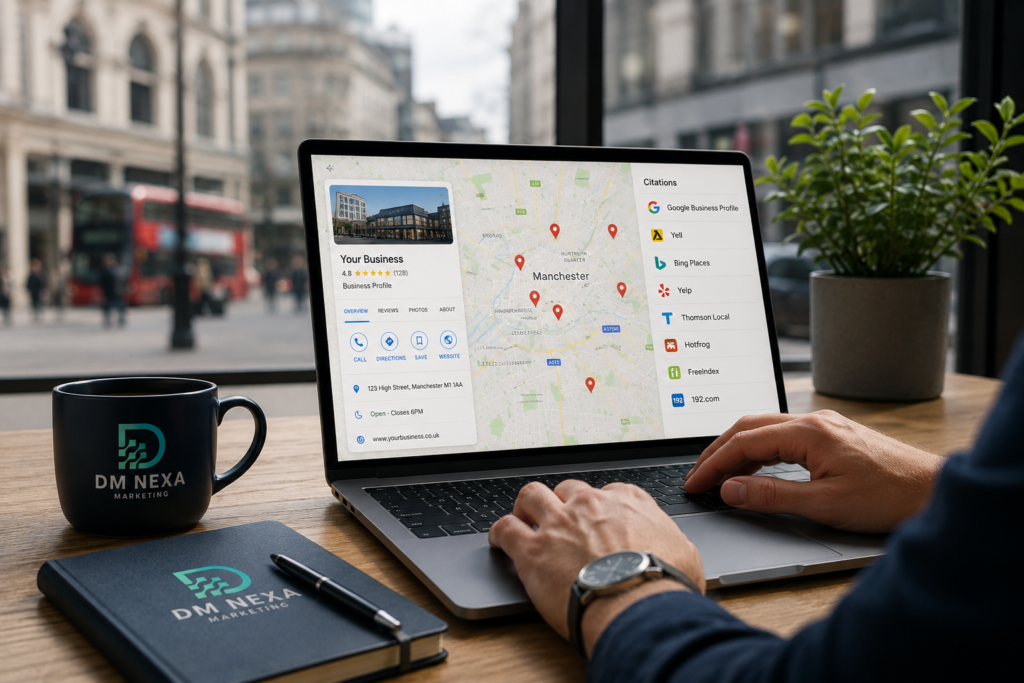
Structured citations are listings found on websites specifically designed to display business information in a consistent format. Examples include Google Business Profile, Yell, Bing Places, Thomson Local, Apple Business Connect, and other online directories.
Unstructured citations, on the other hand, appear naturally within online content. These could include a local newspaper mentioning your business, a blog reviewing your services, a sponsorship announcement, or a community website highlighting local companies. Although less structured, these mentions still provide valuable trust signals that support your overall local SEO strategy.
Rather than viewing citations as simple directory listings, think of them as digital references that confirm your business exists, operates in a specific location, and provides genuine services. The more consistent and trustworthy those references are, the more confidence search engines have in recommending your business to local customers.
Why Local Citations Still Matter for Local SEO in 2026
Search engine optimisation has changed dramatically over the past decade. Artificial intelligence, machine learning, and behavioural signals now influence rankings more than ever before. However, Google’s primary goal hasn’t changed, it still wants to deliver the most accurate and trustworthy results to users.
This is exactly where local citations SEO continues to provide value.
Every citation acts as another point of verification. When Google finds the same business information across multiple reputable websites, it becomes easier for the search engine to confirm that your business is genuine. This additional confidence strengthens your online presence and supports your visibility in local search results, particularly within Google Maps and the Local Pack.
For UK businesses operating in competitive industries, citations can also help create a competitive advantage. Imagine two local companies offering similar services. Both have well-designed websites and positive customer reviews, but one maintains consistent, accurate business listings across trusted directories while the other has outdated information scattered across the web. Google is far more likely to trust the business with the stronger and more consistent online footprint.
Local citations also influence customer behaviour. Before contacting a business, many people compare information across different platforms. If they discover conflicting addresses or disconnected phone numbers, confidence quickly disappears. Consistent citations reassure potential customers that they’re dealing with a professional, reliable business.
It’s worth noting that the focus has shifted significantly in recent years. Businesses no longer benefit from submitting their details to hundreds of low-quality directories. Instead, Google rewards businesses that maintain accurate information on reputable, authoritative websites. A smaller collection of high-quality citations will almost always outperform a large number of poor-quality listings.
Understanding NAP Consistency and Why It Matters?
If local citations are the foundation of local SEO, then consistency is what holds everything together.
One of the most important concepts within NAP consistency is ensuring that your business’s Name, Address, and Phone Number remain identical wherever they appear online. Although this sounds straightforward, it’s one of the most common issues affecting local businesses.
Consider a business that recently relocated to a new office. The website has been updated with the new address, but several online directories still display the old location. Meanwhile, Facebook shows a different phone number, and another directory lists an outdated trading name. Individually, these inconsistencies may seem insignificant. Collectively, however, they create uncertainty for both search engines and customers.
Google uses multiple sources to verify business information. When conflicting details appear across trusted websites, it becomes more difficult to determine which version is correct. As a result, your local rankings may suffer because Google’s confidence in your business information decreases.
Strong NAP consistency isn’t only about improving rankings, it also creates a better customer experience. People searching for your business expect accurate contact information every time they find you online. Consistency reduces confusion, prevents lost enquiries, and reinforces your professionalism across every customer touchpoint.
Regular citation audits, prompt updates following business changes, and careful monitoring of your listings are all essential practices for maintaining a healthy local SEO profile.
The Different Types of Local Citations
Not every citation contributes the same level of value. Some sources carry significantly more authority than others, making it important to focus your efforts where they’ll have the greatest impact.
The most familiar citations come from general business directories. These websites allow businesses to create structured profiles containing essential contact information and are often trusted by both search engines and consumers. Maintaining complete and accurate listings on these platforms forms the backbone of a strong citation strategy.
Equally important are industry-specific directories. These websites focus on particular sectors, helping businesses reach audiences actively searching for specialist services. For example, legal firms, healthcare providers, tradespeople, and hospitality businesses often benefit from directories tailored to their industries. Because these platforms are highly relevant, they can strengthen your authority within your niche while reinforcing local relevance.
Local organisations also provide valuable citation opportunities. Chambers of commerce, business networking groups, local council directories, and community organisations often maintain trusted business listings that demonstrate your connection to the local area. These citations not only support local SEO but also strengthen your reputation within the communities you serve.
Finally, don’t overlook your social media business profiles. Platforms such as Facebook and LinkedIn may not be traditional directories, but they still contribute to your online business identity. Keeping your contact details accurate across these platforms helps reinforce consistency while making it easier for customers to engage with your business.
By focusing on trusted, relevant, and well-maintained citation sources rather than chasing volume, you’ll build a much stronger foundation for long-term local SEO success.
Where UK Businesses Should Build Local Citations
Building local citations isn’t about listing your business on every directory you can find. In fact, that approach is more likely to waste time than improve your rankings. Today’s local citations SEO strategy is centred on earning listings from trusted, relevant, and authoritative sources that both search engines and customers recognise.
The first place every UK business should start is its Google Business Profile. This is arguably the most influential local listing because it powers Google Maps and the Local Pack. Ensure every section is completed accurately, including your business category, opening hours, website, services, and contact information. From there, expand your presence to other reputable platforms such as Bing Places, Apple Business Connect, Yell, Thomson Local, Yelp, Scoot, and 192.com. These directories have established credibility and help reinforce your business information across the web.
Beyond general directories, look for opportunities within your own industry. Many sectors have specialist directories that attract highly targeted visitors and provide stronger relevance signals than generic listings. Local chambers of commerce, business associations, council websites, sponsorship pages, and community organisations are also valuable citation sources. These websites often have strong authority and demonstrate that your business is genuinely active within its local community.
Rather than chasing hundreds of directory submissions, invest your time in building and maintaining a smaller collection of high-quality citations. Search engines place far greater value on trusted sources with accurate information than on a large number of low-quality listings.
Common Local Citation Mistakes to Avoid
Creating citations is only half the job. Keeping them accurate and up to date is equally important. Many businesses unknowingly damage their local SEO by allowing outdated or inconsistent information to remain online for years.
One of the most common issues is duplicate listings. This often happens when a business moves location, changes its name, or accidentally creates multiple profiles on the same directory. Duplicate listings confuse search engines by sending mixed signals about which information is correct. They can also frustrate customers who may contact an old phone number or visit an outdated address.
Another frequent mistake is failing to update business information after making changes. Whether you’ve relocated, changed your telephone number, updated your trading hours, or rebranded, every online citation should reflect those changes. Leaving outdated information on trusted directories weakens customer confidence and reduces the effectiveness of your local SEO efforts.
Businesses should also avoid keyword stuffing within their business name. Some owners attempt to improve rankings by adding phrases such as “Best Plumber in Swansea” to their official business name. This practice often violates directory guidelines and can result in listing suspensions or reduced trust. Your business name should always match your legal or publicly recognised trading name.
Finally, avoid submitting your business to low-quality or spammy directories simply to increase citation numbers. Modern search engines prioritise quality over quantity, making authoritative listings far more valuable than dozens of irrelevant ones.
How to Audit and Manage Your Local Citations
Local citations aren’t something you create once and forget about. As your business grows, your online information needs regular maintenance to remain accurate and effective.
A simple way to begin a citation audit is by searching your business name, address, and phone number on Google. Review the listings that appear and compare them with the information displayed on your website and Google Business Profile. Pay close attention to spelling, abbreviations, postcode formatting, telephone numbers, website URLs, and opening hours. Even small inconsistencies can accumulate over time.
It’s also worth checking whether duplicate listings exist across major directories. Where possible, claim ownership of your listings so you can update information directly whenever changes occur. If duplicate profiles cannot be edited, most reputable directories offer procedures for requesting removal or merging listings.
Many businesses schedule citation audits every three to six months, particularly after relocating, changing branding, or expanding into new service areas. This proactive approach helps maintain strong NAP consistency SEO, reduces customer confusion, and ensures search engines continue to trust your business information.
Think of citation management as routine business maintenance. Just as you would update your website or respond to customer reviews, keeping your citations accurate helps preserve your online reputation and supports sustainable local search performance.
Local Citations vs Backlinks: What’s the Difference?
Although they’re often mentioned together, local citations and backlinks perform very different roles within an SEO strategy.
A local citation is primarily a mention of your business information. Its main purpose is to help search engines verify that your business exists, operates in a particular location, and provides legitimate services. Citations strengthen local relevance and trust, making them particularly valuable for businesses targeting customers within a specific geographical area.
A backlink, however, is a hyperlink from another website pointing directly to your own. Backlinks pass authority and remain one of Google’s strongest organic ranking signals. High-quality backlinks from respected publications, industry websites, or local news outlets can significantly improve your website’s authority and search visibility.
The strongest local SEO campaigns combine both elements. Citations help establish credibility and verify business information, while backlinks increase your website’s authority and ability to compete for more competitive search terms. Rather than choosing one over the other, businesses should view citations and backlinks as complementary parts of a well-rounded SEO strategy.
Best Practices for Local Citations SEO in 2026
As local SEO continues to evolve, businesses that prioritise accuracy and quality will achieve the best long-term results. A successful local citations SEO strategy begins with maintaining complete and consistent business information across every platform where your company is listed.
Focus your efforts on authoritative UK directories and relevant industry websites instead of chasing hundreds of low-value listings. Ensure your business name, address, phone number, website, and opening hours remain identical across every citation. Small inconsistencies can quickly undermine the trust you’ve worked hard to build.
Regularly monitor your listings for changes, duplicate profiles, or outdated information. Encourage satisfied customers to leave reviews on your key platforms, as reviews work alongside citations to strengthen your local presence and improve customer confidence.
If you’re looking to strengthen every aspect of your local SEO strategy, our guide on 10 Local SEO Tips to Improve Business Visibility in 2026 explores additional techniques that can help your business attract more local customers and stay ahead of the competition.
Remember that citations are not a one-off task. They require ongoing attention as your business grows, expands, or changes. Businesses that consistently maintain accurate information across trusted websites build stronger credibility with both search engines and potential customers.
Conclusion
Despite the rapid evolution of search engine algorithms, local citations continue to play an important role in helping UK businesses establish trust and improve local visibility. They provide search engines with consistent signals that verify your business information while making it easier for customers to find and contact you with confidence.
The key to success in 2026 isn’t creating the largest number of citations, it’s maintaining the highest quality ones. By focusing on reputable directories, improving NAP consistency SEO, removing outdated listings, and regularly auditing your online presence, you’ll build a stronger foundation for long-term local search success.
Local SEO is built on trust, and accurate citations remain one of the clearest ways to demonstrate that trust online. If you’re ready to improve your local rankings with a tailored strategy that delivers measurable results, explore our SEO Llanelli services and discover how DM Nexa Marketing can help your business generate more visibility, more enquiries, and more local customers.
More Posts